
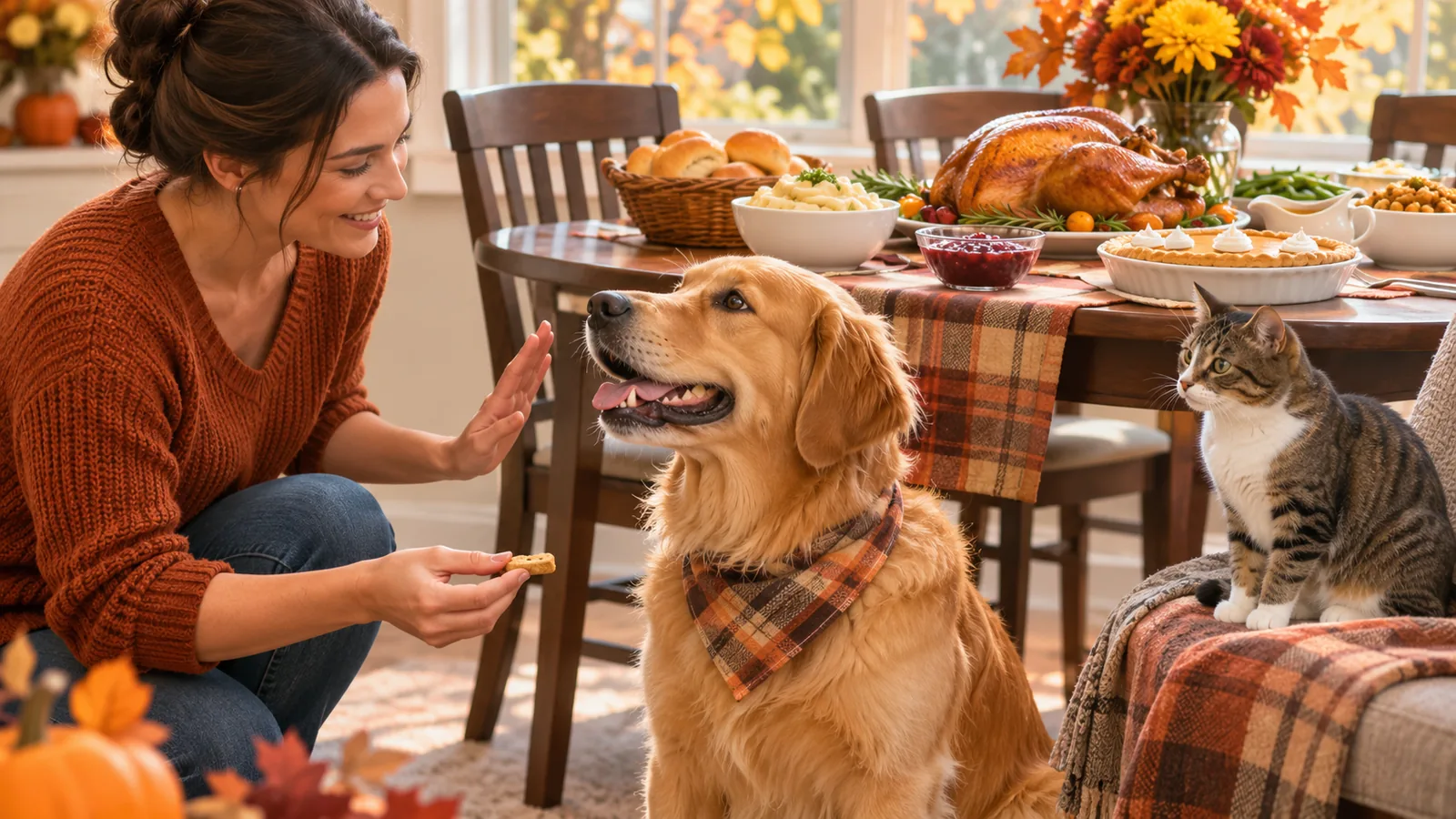
Thanksgiving Pet Safety: Holiday Foods, Guests, and Hazards to Watch For
Thanksgiving is a time for family, friends, delicious food, and a little extra gratitude. And for many of us, our pets are right in the middle of the celebration—usually hoping someone drops a piece of turkey!
While the holidays bring plenty of opportunities to make wonderful memories, they can also introduce unexpected risks for our four-legged family members. From tempting table scraps to unfamiliar houseguests, a little preparation can go a long way toward keeping your dog or cat happy, healthy, and safe.
Before the festivities begin, here are a few important Thanksgiving pet safety tips every pet owner should know.
Thanksgiving Foods That Can Be Dangerous for Pets
It's hard to resist those pleading puppy eyes or the curious cat investigating what's on the kitchen counter. But not everything on our Thanksgiving tables is safe for pets.
Some holiday favorites can cause digestive upset, while others may lead to serious medical emergencies.
1. Turkey Bones, Skin, and Fatty Foods
Plain, fully cooked, boneless turkey meat can be an occasional treat for many healthy dogs and cats. However, turkey bones, skin, gravy, and heavily seasoned meat are best avoided.
- Cooked bones can splinter or cause choking, intestinal injuries, or blockages.
- Fatty foods can trigger vomiting, diarrhea, and potentially pancreatitis.
- Seasonings and marinades may contain ingredients that are harmful to pets.
If you'd like to share a little Thanksgiving turkey, stick to a small portion of plain, unseasoned meat without bones or skin.
2. Onions, Garlic, and Stuffing
Many Thanksgiving dishes contain onions, garlic, chives, or other members of the allium family. These ingredients are toxic to both dogs and cats and can damage red blood cells, potentially leading to anemia.
Stuffing, casseroles, gravy, and seasoned vegetables may all contain these ingredients, even when they're not immediately obvious.
The safest approach? Keep seasoned side dishes off your pet's menu entirely.
3. Grapes, Raisins, and Desserts
Grapes and raisins can cause serious kidney injury in dogs. Even small amounts may be dangerous, so foods containing these ingredients should always be kept out of reach.
Desserts also deserve extra attention. Chocolate is toxic to dogs and cats, and sugar-free sweets or baked goods may contain xylitol, an artificial sweetener that can cause life-threatening low blood sugar and liver injury in dogs.
Keep pies, cookies, fruit salads, and other desserts safely away from curious noses and paws.
4. Bread Dough and Alcohol
If you're baking homemade rolls or bread this Thanksgiving, be especially careful with raw yeast dough.
When swallowed, the dough can expand in a pet's stomach and produce alcohol as it ferments, creating a potentially life-threatening emergency.
Alcoholic beverages should also be kept away from pets. Even relatively small amounts can cause dangerous effects.
Can Pets Have Any Thanksgiving Treats?
Yes! Your pet doesn't have to miss out on all the fun.
If your dog or cat is healthy and doesn't have dietary restrictions, a few simple foods can be offered in moderation:
- Small pieces of plain, cooked, boneless turkey
- Plain, cooked green beans without butter or seasoning
- A small amount of plain pumpkin puree (not pumpkin pie filling)
- Small portions of plain, cooked sweet potato without added sugar, butter, or spices
Remember that treats and extras should make up only a small portion of your pet's daily diet.
For pets with diabetes, pancreatitis, food allergies, or other medical conditions, it's best to stick with their prescribed diet unless your veterinarian recommends otherwise.
A helpful holiday tip: Set aside your pet's approved treat before Thanksgiving dinner begins. That way, they can enjoy something special without receiving a mystery collection of table scraps from well-meaning relatives!
Don't Forget About the Trash!
Sometimes the biggest Thanksgiving danger isn't what's on the table—it's what's left behind.
Turkey carcasses, bones, cooking grease, food wrappers, and discarded leftovers can be especially tempting to pets.
Dogs are notorious for investigating garbage cans, but curious cats can get into trouble, too.
To prevent an unexpected trip to the veterinarian:
- Dispose of turkey bones and food scraps promptly.
- Use a trash can with a secure lid.
- Keep garbage bags out of reach until they can be taken outside.
- Remind guests not to leave plates or leftovers unattended.
A few minutes of cleanup can prevent a much bigger problem later.
Holiday Guests Can Be Stressful for Dogs and Cats
Thanksgiving gatherings often mean extra activity, unfamiliar voices, ringing doorbells, and changes to the household routine.
While some pets love being the center of attention, others may find the excitement overwhelming.
Create a Quiet, Comfortable Space
Consider setting up a separate room where your pet can retreat if things become too busy.
Include familiar bedding, fresh water, favorite toys, and, for cats, access to a litter box.
Let your pet choose whether they want to socialize rather than encouraging interactions when they're uncomfortable.
Watch for Signs of Stress
Pets may communicate discomfort through behaviors such as:
- Hiding or avoiding interaction
- Pacing, trembling, or excessive panting
- Changes in body posture or tail position
- Growling, hissing, or attempting to escape
- Excessive vocalization or restlessness
If your pet seems overwhelmed, give them space and allow them to relax somewhere quiet.
Set Ground Rules for Guests
Not everyone knows which foods are unsafe for pets or how to recognize when an animal needs a break.
Before dinner, kindly remind visitors—especially children—not to feed pets from the table or approach them while they're resting.
A simple conversation can help prevent accidental food exposures and stressful interactions.
Keep an Eye on Doors and Exits
With guests coming and going, front doors may be opening more frequently than usual.
Even pets that normally stay close to home can slip outside unnoticed during a busy gathering.
Before the holiday, make sure your pet's identification tags are current and their microchip registration information is up to date.
If your pet tends to rush the door, consider keeping them in a secure room or behind a pet gate during arrivals and departures.
Traveling With Your Pet for Thanksgiving?
If your holiday plans include hitting the road with your dog or cat, a little preparation can make the trip smoother for everyone.
Bring along their regular food, medications, water, and a few familiar comfort items. Maintain their usual feeding and medication schedules as closely as possible.
Pets should always travel safely secured in an appropriate carrier or restraint system, and they should never be left unattended in a parked vehicle.
If your pet struggles with travel anxiety or motion sickness, talk with your veterinarian before the trip about options that may help.
When Should You Call Your Veterinarian?
Despite our best efforts, accidents sometimes happen.
Contact a veterinarian promptly if your pet eats something potentially toxic or dangerous, even if they appear perfectly normal afterward. Some harmful substances can cause delayed symptoms.
Warning signs that require veterinary attention include:
- Repeated vomiting or diarrhea
- A swollen or painful abdomen
- Unusual weakness, trembling, or collapse
- Difficulty breathing
- Repeated attempts to vomit without producing anything
- Significant changes in behavior or responsiveness
Do not induce vomiting or give home remedies unless specifically instructed by a veterinarian.
If an emergency occurs when your regular veterinary clinic is closed, contact an emergency veterinary hospital or a pet poison control service for guidance.
A Safe Thanksgiving Is Something to Be Thankful For!
Our pets bring so much joy to our lives, and Thanksgiving is a wonderful opportunity to appreciate the companionship, laughter, and unconditional love they provide throughout the year.
By keeping unsafe foods out of reach, providing a comfortable environment, and planning ahead for holiday activities, you can help make Thanksgiving enjoyable for every member of your family—including the ones with four paws!
From all of us at Marshall County Veterinary Clinic, we wish you and your pets a happy, healthy, and safe Thanksgiving!
If you have questions about holiday pet safety, dietary concerns, or your pet's health, our veterinary team is always happy to help. Contact us to schedule an appointment or discuss your pet's individual needs.