
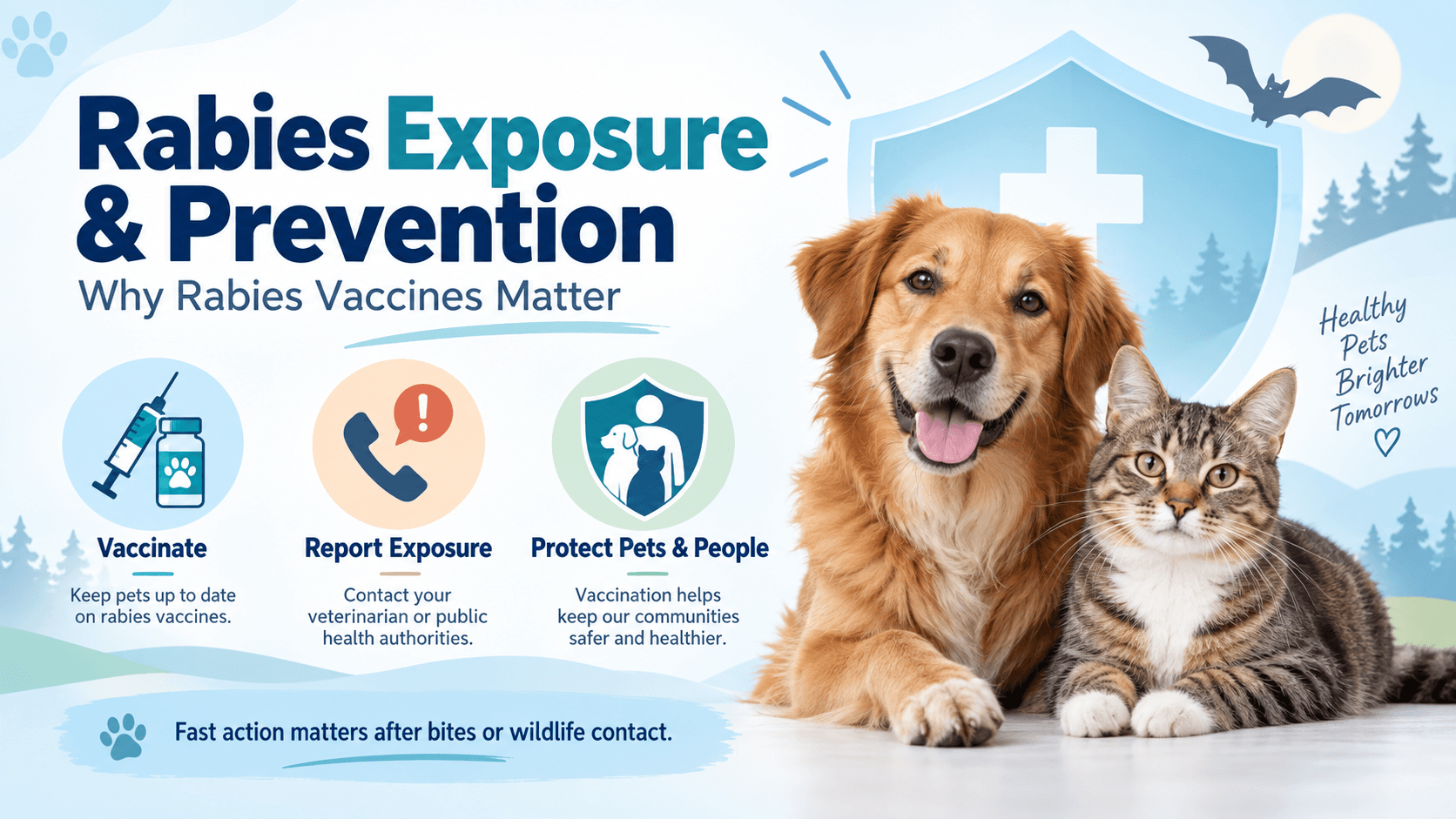
Rabies is one of those diseases most pet owners have heard of, but many people do not think about it until there is a bite, a bat in the house, or a sudden wildlife encounter in the yard.
And at that point, things can get stressful quickly.
The good news is that rabies is preventable. Keeping dogs and cats current on their rabies vaccines is one of the simplest and most important ways to protect pets, families, veterinary teams, and the community. In Illinois, dogs and cats over 16 weeks of age are required to be vaccinated for rabies with an approved vaccine administered by a licensed veterinarian.
At Marshall County Veterinary Clinic, we want pet owners to understand not only why rabies vaccination matters, but also what to do if there is a possible exposure.
What Is Rabies?
Rabies is a deadly viral disease that affects mammals, including dogs, cats, livestock, wildlife, and people. It is usually spread through the bite of an infected animal, though scratches and saliva contact with broken skin or mucous membranes can also be a concern.
Once signs of rabies appear, the disease is almost always fatal. That is why prevention, fast reporting, and appropriate medical or veterinary follow-up are so important.
Why Rabies Vaccines Are So Important
Rabies vaccines protect more than just the individual pet receiving the vaccine.
Vaccinated pets help create a barrier between wildlife and people. The Illinois Department of Public Health specifically notes that vaccinated pets serve as a buffer between rabid wildlife and humans, which is one reason keeping dogs and cats up to date is so important.
A current rabies vaccine can also make a major difference in what happens after a possible exposure. If a vaccinated dog or cat is exposed to a rabid or potentially rabid animal, the required follow-up may be very different than it would be for an unvaccinated or overdue pet. Illinois guidance states that an officially vaccinated dog, cat, or ferret exposed to rabies should be revaccinated and confined for 45 days, while an unvaccinated or not-current pet may require a much longer strict confinement period.
In plain language: keeping your pet current can protect their health and may help avoid much more difficult quarantine situations.
What Animals Carry Rabies?
In Illinois, rabies is most commonly associated with wildlife, especially bats. Other mammals can also carry rabies, including raccoons, skunks, foxes, and coyotes.
Any unexpected contact between a pet and wildlife should be taken seriously, especially if:
- Your pet was bitten or scratched
- Your pet had a fight with a wild animal
- A bat was found in the home
- A pet was found near a bat and the bat cannot be tested
- The wild animal was acting strangely
- The other animal escaped and cannot be identified or tested
Not every wildlife encounter is a rabies exposure, but it is always better to ask than to guess.
What Should You Do If Your Pet Is Bitten by Wildlife?
If your dog or cat is bitten, scratched, or exposed to a wild animal, take these steps:
1. Do Not Handle the Wild Animal
Avoid touching wildlife, even if it appears injured, sick, or dead. Rabies risk is not something to investigate bare-handed.
2. Keep Your Pet Safely Contained
Bring your pet indoors or move them to a secure area if you can do so safely. This helps prevent additional exposure and protects other animals and people.
3. Call Your Veterinarian
Contact your veterinary clinic right away. Your veterinarian can review your pet’s rabies vaccine status, examine wounds, and help determine the appropriate next steps.
4. Contact Local Animal Control or Public Health Officials
Rabies exposure protocols involve local animal control and/or public health authorities. Illinois public health guidance advises contacting animal control when an animal bites a person or when a pet is bitten by another animal so quarantine or testing guidance can be provided.
5. Do Not Delay
Rabies decisions are time-sensitive. Waiting “to see what happens” can make the situation more complicated and potentially more dangerous.
What If a Pet Bites a Person?
If a dog, cat, or ferret bites a person, it must be reported and handled according to local requirements. In Illinois, an apparently healthy domestic dog, cat, or ferret that bites a human must be captured, confined, and professionally observed for 10 days following the bite.
This 10-day observation period helps determine whether the animal may have been infectious at the time of the bite. Even if the pet is vaccinated, the bite still needs to be handled properly.
If your pet bites someone:
- Make sure the person washes the wound thoroughly and seeks medical advice
- Provide your pet’s rabies vaccine information
- Contact animal control or the local health department as required
- Follow all confinement or observation instructions
- Contact your veterinarian if your pet is ill, injured, or behaving abnormally
This process is not about punishment. It is about protecting everyone involved.
A Special Note About Bats
Bats deserve their own section because bat exposures can be easy to miss.
A person or pet may not always have an obvious bite mark after contact with a bat. If a bat is found in a room with a sleeping person, a child, someone who cannot reliably report contact, or a pet, public health officials may treat that as a possible exposure depending on the situation. IDPH advises that if someone wakes up to find a bat in the room, they should not kill or release the bat before contacting a doctor or local health department for guidance.
If you find a bat in your home:
- Do not release it until you have spoken with local public health or animal control
- Keep people and pets away from the bat
- Call for guidance on safe capture and testing
- Contact your veterinarian if your pet may have had contact with the bat
Testing the bat, when possible, may help determine whether people or pets need additional care.
What Happens If a Person May Have Been Exposed?
People who may have been exposed to rabies should contact a physician or local health department right away. Human rabies post-exposure prophylaxis, often called PEP, may include thorough wound washing, human rabies immune globulin, and a series of rabies vaccines.
For bite wounds, immediate washing with soap and water is very important. CDC guidance notes that thorough wound cleansing can reduce the likelihood of rabies infection, but medical guidance is still needed after a possible exposure.
Your veterinarian can help with your pet’s side of the situation, but human exposure questions should always be directed to a medical provider or public health department.
How Pet Owners Can Reduce Rabies Risk
Rabies prevention does not have to be complicated. A few consistent habits make a big difference.
Keep Rabies Vaccines Current
Make sure every dog and cat in your household stays up to date on rabies vaccination. This includes indoor-only cats. Indoor pets can still be exposed through bats, accidental escapes, travel, or emergency situations.
Keep Vaccine Records Handy
You may need proof of rabies vaccination for boarding, grooming, travel, licensing, bite reports, or emergency situations. If you are not sure whether your pet is current, call your veterinary clinic.
Avoid Wildlife Contact
Do not allow pets to chase, corner, or interact with wildlife. Keep dogs leashed when appropriate and supervise outdoor time.
Do Not Feed Wildlife
Leaving food outside can attract raccoons, skunks, stray animals, and other wildlife. Secure trash, remove outdoor food sources, and avoid encouraging animals to gather near your home.
Report Strange Wildlife Behavior
Wild animals that seem unusually friendly, disoriented, aggressive, weak, or active at odd times should be avoided and reported to the appropriate local agency.
When to Call Your Veterinary Team
Call Marshall County Veterinary Clinic if:
- Your pet is overdue for rabies vaccination
- You are unsure of your pet’s rabies vaccine status
- Your pet was bitten or scratched by another animal
- Your pet had contact with a bat
- Your pet bit a person or another animal
- Your pet has a wound after a fight or unknown encounter
- You need help locating vaccine records
We would always rather answer questions early than have a family wait during a possible rabies concern.
The Bottom Line
Rabies is serious, but prevention is straightforward. Keeping dogs and cats current on rabies vaccination protects pets, families, veterinary teams, and the wider community.
If your pet is due or overdue for a rabies vaccine, or if you have questions after a bite or wildlife encounter, contact Marshall County Veterinary Clinic in Lacon. Our team can help review your pet’s vaccine status, explain next steps, and guide you through what to do if a possible exposure occurs.