
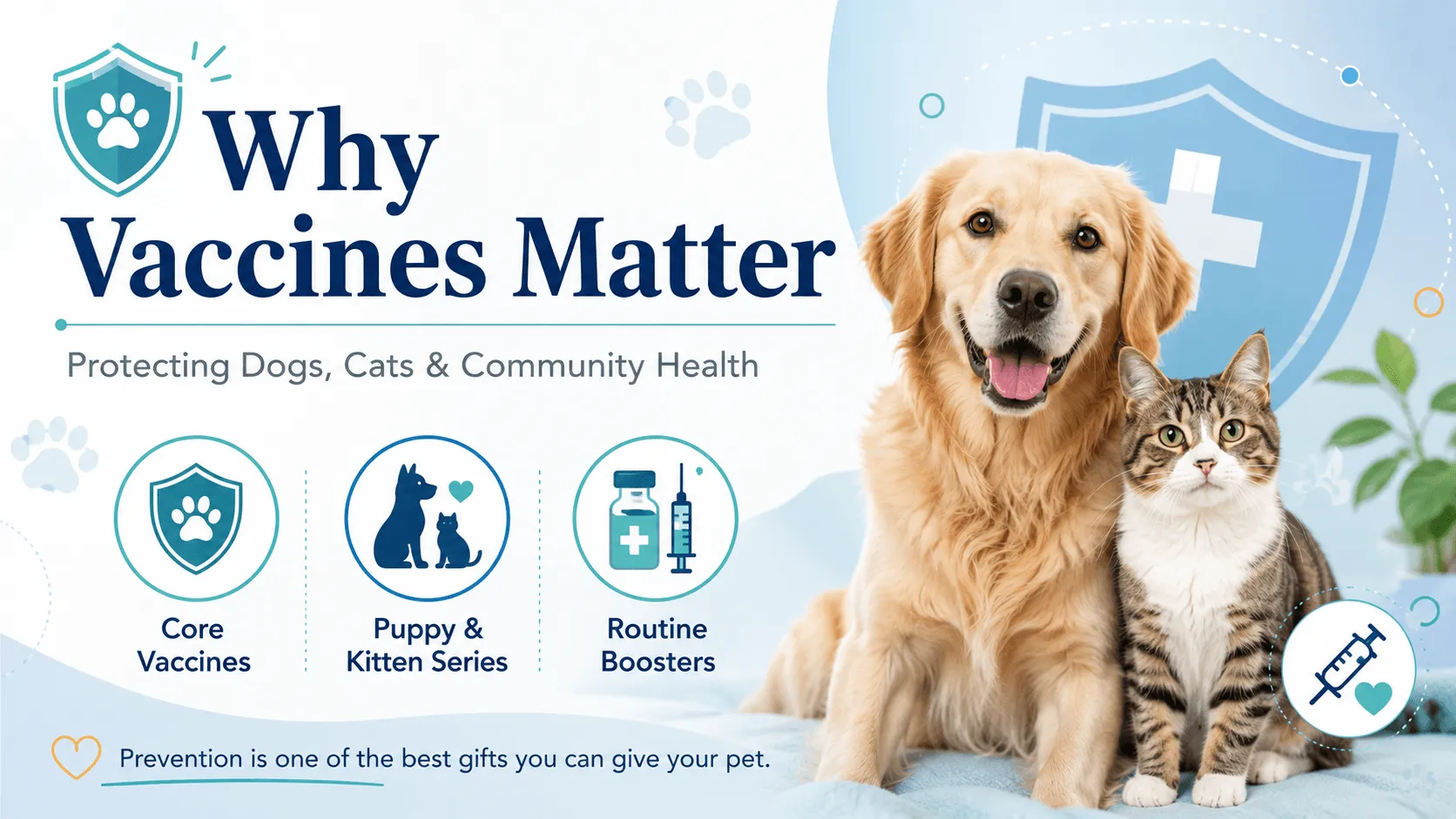
Why Vaccines Matter: Protecting Dogs, Cats, and the People Who Love Them
Vaccines may not be the most exciting part of your pet’s veterinary visit — most dogs would probably vote for treats, and most cats would vote to skip the car ride entirely — but they are one of the most important tools we have to protect your pet’s long-term health.
For dogs and cats, vaccines help prevent serious diseases that can spread quickly, cause severe illness, and in some cases, affect people too. At Marshall County Vet, we believe vaccine visits are about more than “getting shots.” They are an important part of preventive veterinary care and a chance to make sure your pet is protected based on their age, lifestyle, and risk factors.
What Do Vaccines Actually Do?
Vaccines help train your pet’s immune system to recognize and respond to certain diseases. If your pet is exposed later, their body is better prepared to fight off the infection or reduce the severity of illness.
In simple terms, vaccines give the immune system a “practice round” before it faces the real thing.
That protection matters because many vaccine-preventable diseases can be dangerous, expensive to treat, and sometimes fatal.
Core vs. Lifestyle Vaccines: What’s the Difference?
Not every pet needs the exact same vaccine plan. Veterinary teams usually group vaccines into two categories: core vaccines and lifestyle-based vaccines.
Core Vaccines
Core vaccines are recommended for most pets because they protect against diseases that are widespread, serious, highly contagious, or a public health concern.
For dogs, core vaccines commonly protect against diseases such as:
- Rabies
- Distemper
- Adenovirus/hepatitis
- Parvovirus
- Leptospirosis
For cats, core vaccines commonly protect against diseases such as:
- Rabies
- Feline panleukopenia
- Feline herpesvirus
- Feline calicivirus
These diseases are not just “old problems” from the past. They still exist, and unvaccinated pets are much more vulnerable.
Lifestyle-Based Vaccines
Lifestyle vaccines are recommended based on your pet’s daily life and exposure risk.
Your veterinarian may ask questions like:
- Does your dog go to daycare, grooming, boarding, training classes, or dog parks?
- Does your cat go outdoors, live with other cats, or have exposure to unknown cats?
- Do you travel with your pet?
- Does your pet spend time around wildlife, standing water, wooded areas, or livestock?
- Is your pet young, senior, immunocompromised, or managing a chronic condition?
Based on those answers, your veterinarian may recommend additional protection such as Bordetella, canine influenza, Lyme disease, or feline leukemia vaccines.
This is why vaccine recommendations can vary from pet to pet — and why a quick conversation with your veterinary team is so helpful.
“My Pet Stays Indoors. Do They Still Need Vaccines?”
We hear this question often, especially from cat owners.
The short answer is: yes, indoor pets still need certain vaccines.
Indoor cats and mostly indoor dogs can still be exposed to disease in unexpected ways. A pet may slip outside, encounter a bat or wildlife, visit the groomer, stay at a boarding facility, or need emergency care where other animals are present. Humans can also carry certain germs inside on shoes, clothing, or hands.
And in Illinois, rabies vaccination is required for dogs and cats. Rabies protection is important not only for pets, but also for public health.
Even if your pet lives a very quiet indoor life, vaccines remain an important safety net.
Puppies and Kittens Need a Strong Start
Puppies and kittens are especially vulnerable because their immune systems are still developing. They need a series of vaccines during their first months of life to build strong protection.
Skipping or delaying these early vaccines can leave young pets at risk during one of the most sensitive stages of life.
For puppies, parvovirus is one of the biggest concerns. It is highly contagious, can survive in the environment, and can cause severe vomiting, diarrhea, dehydration, and life-threatening illness.
For kittens, diseases like panleukopenia and upper respiratory viruses can spread easily and be especially serious in young or unvaccinated cats.
A complete puppy or kitten vaccine series helps give your new pet the healthiest possible start.
Adult Pets Need Boosters Too
Vaccines are not just for puppies and kittens. Adult dogs and cats need boosters to keep their protection current.
The timing depends on the vaccine, your pet’s health, previous vaccine history, and local requirements. Some vaccines may be given annually, while others may be given every few years.
This is one reason annual wellness visits are so valuable. Even if your pet seems perfectly healthy, that visit allows your veterinary team to review vaccine status, check for health changes, and make sure your pet’s preventive care plan still fits their lifestyle.
After all, a lot can change in a year. Maybe your dog started going to daycare. Maybe your cat gained a new feline roommate. Maybe your family is traveling more. Vaccine plans should grow and adjust with your pet’s life.
Vaccines Help Protect the Community
Vaccines do more than protect individual pets. They also help protect the larger pet community.
When more pets are vaccinated, diseases have fewer chances to spread. This helps protect:
- Puppies and kittens too young to be fully vaccinated
- Senior pets
- Pets with weakened immune systems
- Shelter and rescue animals
- Wildlife and livestock in some cases
- People, especially when it comes to diseases like rabies and leptospirosis
Preventive care is one of those quiet things that works best when we do it consistently. It may not feel dramatic in the moment, but it can prevent very serious problems down the road.
Are Vaccine Reactions Possible?
Mild vaccine reactions can happen, just like they can in people. Most pets tolerate vaccines very well, but some may be a little tired or sore afterward.
Call your veterinarian if your pet has:
- Facial swelling
- Hives
- Repeated vomiting
- Difficulty breathing
- Extreme lethargy
- Collapse
- Severe pain or swelling at the vaccine site
These reactions are uncommon, but they should be taken seriously. If your pet has had a reaction before, let your veterinary team know before future vaccines. Your veterinarian can adjust the plan to help keep your pet as safe and comfortable as possible.
Keeping Track of Your Pet’s Vaccines
One of the simplest ways to avoid confusion is to keep your pet’s vaccine records handy.
You may need proof of vaccination for:
- Grooming
- Boarding
- Daycare
- Training classes
- Travel
- Licensing
- Emergency visits
- Bite or wildlife exposure situations
If you are not sure whether your pet is current, give us a call.Our team can help review your pet’s records and let you know what may be due.
The Bottom Line: Vaccines Are Preventive Care, Not Just Paperwork
Vaccines are one of the most effective ways to protect dogs and cats from preventable disease. They help keep pets healthier, reduce the spread of illness, and protect the people who love them.
The best vaccine plan is not one-size-fits-all. It should be based on your pet’s age, health, environment, travel habits, and lifestyle.
If you have questions about which vaccines your dog or cat needs, or if your pet may be overdue, contact Marshall County Vet in Lacon. We are happy to help you create a vaccine plan that makes sense for your pet and your family.